
 Français
 Deutsch



Do you think you "don't use AI" because you've never deployed a chatbot, specialized software, or a large-scale automation system? In reality, AI has long been present in familiar tools like smartphones, email, maps, entertainment platforms, shopping apps, and daily work software.
AI doesn't always appear under an obvious name. Most of the time, this technology operates quietly as features like facial recognition, spam filtering, content recommendations, experience personalization, or route optimization. Join DFM-Europe in debunking the myth "We don't use AI" and discovering how AI has become a natural part of everyday life and modern business operations.
3 reasons why many people don't realize they are already using AI
This confusion stems not only from how AI is portrayed in the media, but also from how technology quietly embeds itself into familiar tools and users' hesitation to embrace change. Below are 3 main reasons why many individuals and businesses fail to realize they are using AI every day.
AI is tied to exaggerated imagery
In the media, AI is constantly depicted as armies of intelligent robots, supercomputer systems, or total automation... Describing the technology through revolutionary milestones has inadvertently shaped a common belief: AI must be something massive, complex, and requiring a complete transformation.
This macro-level vision leads us to easily overlook smaller, highly practical AI applications. In daily life and work, AI rarely appears as a standalone "gigantic system." Instead, it acts as a foundational support layer, quietly embedded inside the products and software we use daily. By only searching for grand models, individuals and businesses easily miss recognizing and maximizing the practical support tools already sitting right inside their existing workflows.
AI appears as "Features", not as "AI"
Beyond stereotypes of macro scales, AI tricks us through its extremely subtle "camouflage." Instead of directly labeling it "This is AI," software developers often choose user-friendly and familiar terms like: "Smart suggestions," "Auto-optimization," or "Personalized experience"...
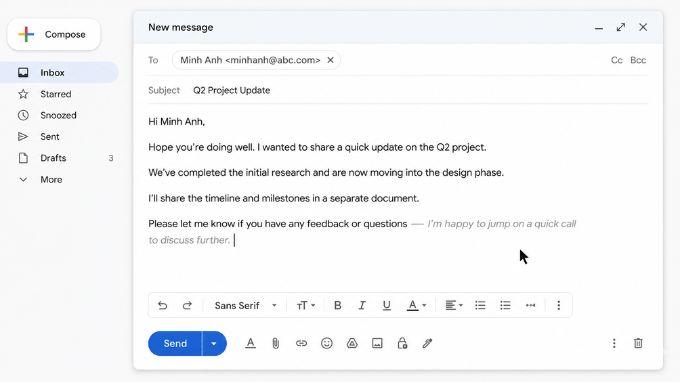
When the word "AI" doesn't appear explicitly on the interface, many businesses naturally view them as ordinary features. When you see ads on Meta or Google reaching the exact right audience, or Gmail completing the rest of a sentence you're drafting, that is smart algorithms at work. Because of this brilliant "invisibility," technology is no longer a separate concept, but a natural part of our everyday actions.
Hesitation to embrace change
Ultimately, saying "we don't use AI" doesn't always stem from a lack of understanding, but rather a very normal psychological reaction. For many managers, "AI" is a concept tied to pressure: heavy investment costs, complex systems, employee retraining, or the risk of losing control.
Thus, denial is sometimes just a way to keep the business in its comfortable safe zone. Even though they are actually using smart features every day, labeling it as "AI" creates the feeling of having to undergo major changes or enter a risky tech race. This desire for "peace of mind" isn't wrong. However, if they stop there, businesses risk missing out on opportunities to better understand and leverage the tools they already have.
The reality: AI is already built into tools you use every day
Rather than being unfamiliar machines in a research lab, artificial intelligence has become an essential element woven into our smallest daily habits and work in very familiar forms:
In your smartphone
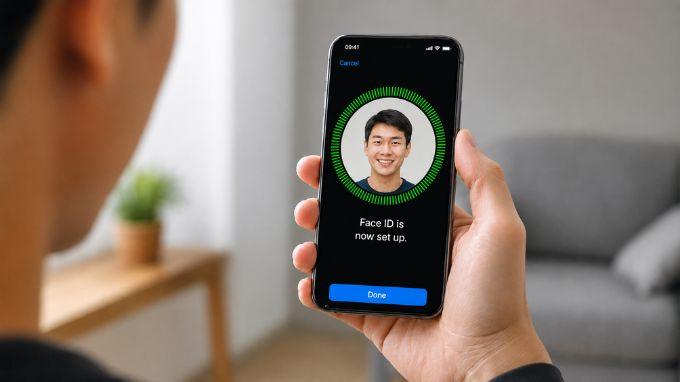
Artificial intelligence has never been a distant concept or something confined to sci-fi movies; it is fully present right inside the phone you hold every day. Operating completely quietly, smartphone AI serves as a core engine with three primary roles: data recognition, interaction support, and personal experience optimization. Thanks to AI, your phone is both a pure communication device and a versatile assistant that understands your habits.
Every time you unlock with Face ID, the system scans and processes thousands of biometric data points in milliseconds. When you speak to Siri or Google Assistant, AI immediately analyzes natural language to understand and accurately respond to your request... Because these conveniences happen so seamlessly and naturally, we take them for granted, forgetting that we carry a powerful "artificial brain" wherever we go.
In email and daily Work
AI in today's workplace doesn't always take the form of a brand-new tool. In reality, AI runs in the background to help familiar software work smarter. This subtle presence optimizes every small action, turning everyday work software into a highly effective support ecosystem.
For instance, Gmail's spam filter automatically categorizes and removes unwanted emails, keeping your inbox clean without requiring manual effort. Even tools like Google Translate have evolved significantly thanks to AI, delivering natural-sounding translations... Without this layer of "invisible assistant," your daily work pace and efficiency would undoubtedly drop significantly.
In entertainment and shopping
Have you ever wondered why apps seem to "read your mind"? From short videos tailored to your taste on TikTok, to catchy music recommendations on Spotify, to product listings and ads matching your exact search on Shopee - none of this is random. The common thread behind these experiences is exceptional personalization, where content is tailored to each individual's unique habits and behaviors.
At a scale of millions or billions of simultaneous users, manually analyzing every click or screen pause is impossible. Standing behind these personalized experiences is AI. By analyzing behavior and making accurate predictions, AI helps platforms automatically display the most relevant entertainment content and shopping products for each person.

In navigation and pricing
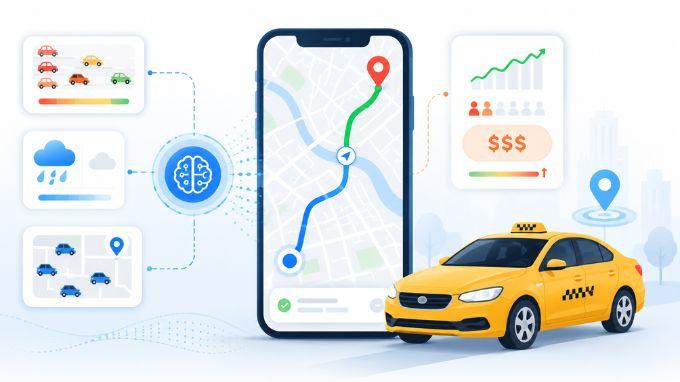
In map and ride-hailing apps, AI's primary role is real-time data processing. Instead of just recording static information, the system continuously aggregates and analyzes traffic density, weather conditions, and the location of millions of vehicles at the exact moment a user requests directions or orders a ride.
Based on this continuous data stream, AI makes near-term, realistic predictions - such as identifying upcoming traffic jams or areas with surging demand. From these forecasts, the system optimizes decisions: suggesting the fastest route to the traveler while automatically applying dynamic pricing to dispatch drivers where needed most, effectively balancing supply and demand. This entire analytical chain happens automatically in seconds right after tapping the screen, allowing users to get optimal travel options without having to calculate or process complex datasets themselves.
Mindset shift: From "denial" to "optimization"
Realizing you're already using AI is just the starting point - the more important question is: are you using it deliberately, or just letting it run in the background without any control?
Acknowledging reality
The first step for businesses to truly optimize operations isn't chasing new tools, but clearly identifying where AI is already present in their current processes. By understanding which technology supports each step, businesses can maximize efficiency and maintain better control over operational decisions. Optimization therefore doesn't start with buying more, but with understanding and mastering what you already own.
However, proactively leveraging AI doesn't mean delegating entire operations to technology. Businesses need to define clear boundaries: separating technical execution tasks that AI can handle while reserving critical stages for humans - those requiring empathy, deep understanding and accountability.
From passive AI use → active AI use
Realizing you use AI is only the first step. To truly break through, businesses must shift from a passive state to an active one. Many businesses remain passive: letting systems run on autopilot, unmonitored and blindly accepting every output produced by the tool without even knowing AI was driving it.
Conversely, active usage doesn't require you to become a tech expert; it simply requires knowing exactly where AI exists in your workflow. Instead of letting the system run on autopilot, you act as the "conductor" directing tools to achieve specific goals.
AI is the tool - Humans are the masters
Don't confuse "leveraging technology" with "completely entrusting everything to it." No matter how smart AI is, it is merely a productivity lever, and that lever is only safe when human hands hold the fulcrum tightly. Using AI is not a trend you're forced to follow, but a smart choice to liberate labor. However, you should never hand over all outcomes to machines without human oversight.
An algorithm can process data quickly, but it cannot replace you when it comes to weighing risks, handling unexpected issues or empathizing with actual customer needs. AI can offer suggestions, but the final decision and ultimate responsibility always rest with humans. Let AI handle repetitive tasks so you have the bandwidth to focus on the unique values that machines can never replicate.
Conclusion
Each of the examples above serves to debunk the myth "We don't use AI" - because in truth, you have been using it every single day. AI is no longer a standalone product to "buy" or "deploy," but an integrated technology layer inside many familiar tools that businesses rely on daily. Therefore, the key question is no longer whether or not to use AI, but whether a business truly understands what it is using, maximizes its value, and maintains sufficient control over its impact on decision-making.
We hope this article helps you better recognize the quiet yet powerful presence of AI in your daily life and work, inspiring you to proactively leverage technology to boost productivity. Don't forget to follow DFM-Europe.com to stay updated with more in-depth analysis and valuable technology insights in the near future!
DFM-Europe.com
See more: