
 Français
 Deutsch



Facing fierce competitive pressure on both speed and cost, the core challenge for today’s managers is not about increasing working hours, but optimizing the operational machinery. Allowing personnel to spend too many resources on repetitive administrative tasks easily leads to burnout and stifles the overall growth of the organization.
To solve this problem, let’s join DFM-Europe to review 5 time-consuming tasks that AI can handle, helping to minimize manual workloads and elevate operational efficiency for your business.
What causes time wastage in businesses?
In reality, many precious working hours are being wasted on routine, "nameless" tasks instead of generating actual business value. The most typical example is employees spending hours manually re-entering data across Emails, Excel sheets, CRMs, or various internal software platforms.
Furthermore, documents and information are often scattered across multiple channels. This forces employees to waste time searching, verifying the latest versions, or waiting for missing data. Too many unnecessary emails, meetings, and redundant approval steps also disrupt focus and delay project timelines.
A lack of integration between tools creates even more manual work, such as copying and pasting data, updating statuses, or generating repetitive periodic reports. Therefore, before applying technology, businesses must clearly identify where time is being leaked to simplify workflows, choose the right tools, and optimize these repetitive tasks.
5 time-consuming tasks AI can handle to support processing
To improve productivity without causing overload, businesses should focus on operational optimization rather than extending employee working hours. Instead of overhauling the entire system, we can start immediately with the following 5 administrative tasks:
Centralized information management and automated data updates
One of the main productivity killers is information fragmentation across websites, emails, documents, and different communication channels. Employees have to spend too much time just searching, reviewing, and reading through content to identify what truly matters. Moreover, when each team member tracks and processes information in their own way, it becomes incredibly difficult for the business to build a unified, easily manageable workflow.
To overcome this, businesses can implement AI solutions that support information management, filtering, and automated data updates. By clearly defining the sources to monitor, priority topics, and how information should be routed to the person in charge, AI tools can execute this with high precision. In this scenario, the ATN Hawk solution provided by myATN can support tracking selected sources, filtering content by topic, and preparing tailored summaries based on user needs. As a result, information is structured more clearly, search time is minimized, and employees can focus on analysis or decision-making.
Summarizing long email threads and meeting minutes
Extended email threads, internal chat logs, and meeting minutes often contain a massive volume of information - but not all of it carries equal value. Employees frequently waste time re-reading entire conversations just to identify what decisions were finalized, who is responsible, and what actionable items need to be executed next.
To address this pain point, AI assistants like Microsoft Copilot or ChatGPT can help summarize content, pinpoint key decisions, and extract action item lists. Instead of scanning through lines of text, users can quickly grasp the context, conclusions, and next steps. However, while AI excels at rapid synthesis, human oversight remains essential for final verification, particularly regarding deadlines and critical strategic decisions.

Automated data extraction and quotation profile preparation
During the process of receiving and handling quotation requests, employees often face the daunting task of reading through countless emails, opening attachments, finding technical parameters, and checking for missing information before drafting a quote. This manual process is not only time-consuming but also highly prone to errors or missed details.
Instead of manual proofreading, businesses can leverage the ATN Quotation solution. This intelligent AI tool reads requests, identifies critical data, and prepares information for the next processing stages. While employees maintain control and make the final decision, the time spent reading, searching, and preparing data is drastically reduced.
Data entry and status synchronization across systems
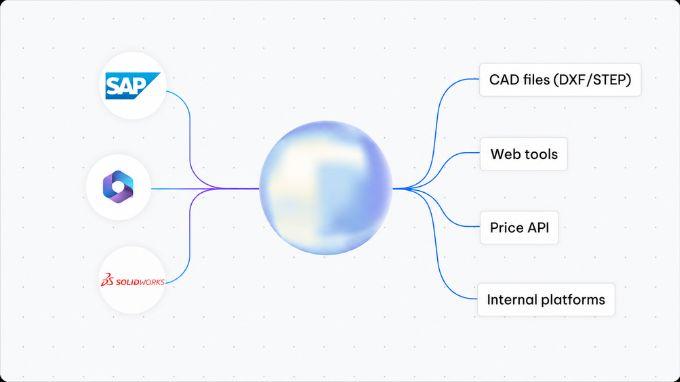
A lack of connectivity between Excel, CRM, accounting software, and internal tools forces employees to manually enter data or duplicate information across multiple platforms. These repetitive actions consume significant time, offer little professional value, and carry a high risk of manual entry errors or data discrepancies.
To radically solve this issue, businesses should prioritize automating tasks that have clear rules, occur frequently, and yield easily verifiable results. The ATN Script solution can execute continuous operational sequences across multiple software platforms - such as automatically transferring data, synchronizing order statuses, or generating documents based on a predefined workflow. Thanks to this, businesses minimize time spent on repetitive tasks, limit entry errors, and empower their workforce to focus on duties that require experience, critical analysis, and deep evaluation.
Personalization and automated marketing email delivery
Maintaining regular contact with multiple customer segments requires marketing teams to spend substantial effort drafting content, segmenting recipient lists, choosing optimal send times, and tracking post-campaign engagement. When done manually, this process is incredibly time-consuming and makes it difficult to ensure every customer receives the message most relevant to their actual needs.
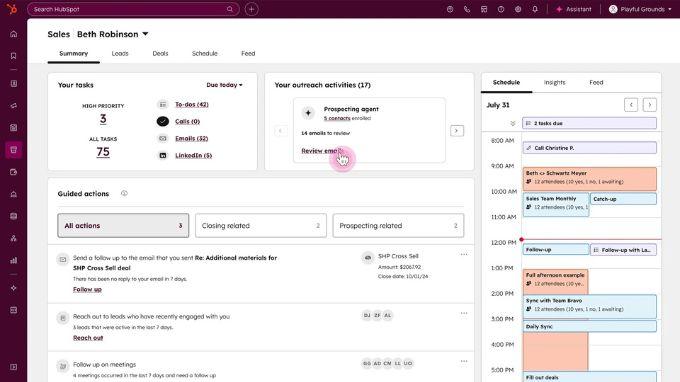
Today, platforms like ActiveCampaign or HubSpot can assist with smart customer segmentation, personalized content recommendations, and automated email delivery based on pre-configured triggers. For instance, the system can automatically send a welcome email as soon as someone registers, send event reminders or deploy a nurturing sequence after a customer downloads a guidebook.
Measuring effectiveness after process improvement
After adjusting workflows or applying technology, businesses need to evaluate actual data rather than relying solely on gut feeling. The goal is to determine whether the changes have successfully reduced processing times, helped employees focus better, and improved cross-departmental collaboration. Evaluation also highlights remaining bottlenecks for further adjustment, preventing a scenario where a new tool is deployed but the underlying process remains overcomplicated.
The evaluation process should be done step-by-step, starting with a small scope before scaling up. Businesses can observe how employees interact with the tool, track project progress, and monitor the level of coordination between departments. Feedback from direct users also helps determine if the solution aligns with practical operational needs. Once positive results are clear and the team adapts well, the business can confidently expand the solution to other operations.
AI is just a tool, humans hold the decision-making power
Technology and automation can help businesses process information faster, minimize repetitive tasks, and mitigate manual errors. However, these tools cannot entirely replace human analytical capabilities, practical experience, and contextual understanding. Employees still hold the vital role of defining objectives, evaluating information quality, and handling edge cases that the system cannot accurately recognize yet.
Businesses should approach AI and automation as supportive tools rather than completely outsourcing the entire workflow to technology. The human role remains core to providing direction, setting boundaries, and taking accountability for final outcomes. A harmonious combination of machine processing speed and human judgment will help businesses optimize productivity while maintaining quality, flexibility and control.
Conclusion
Improving workplace productivity by offloading these 5 time-consuming tasks to AI is the most practical step for businesses to eliminate operational bottlenecks. Consequently, your team will gain more breathing room to focus on creative thinking, deep analysis, and making breakthrough decisions for the organization.
We hope this article has provided a realistic perspective to help you effectively solve the productivity puzzle and select the most suitable automation solutions for your business. Don't forget to follow DFM-Europe.com to stay updated on more practical operational solutions and useful technology insights in the future.
DFM-Europe.com
See more: